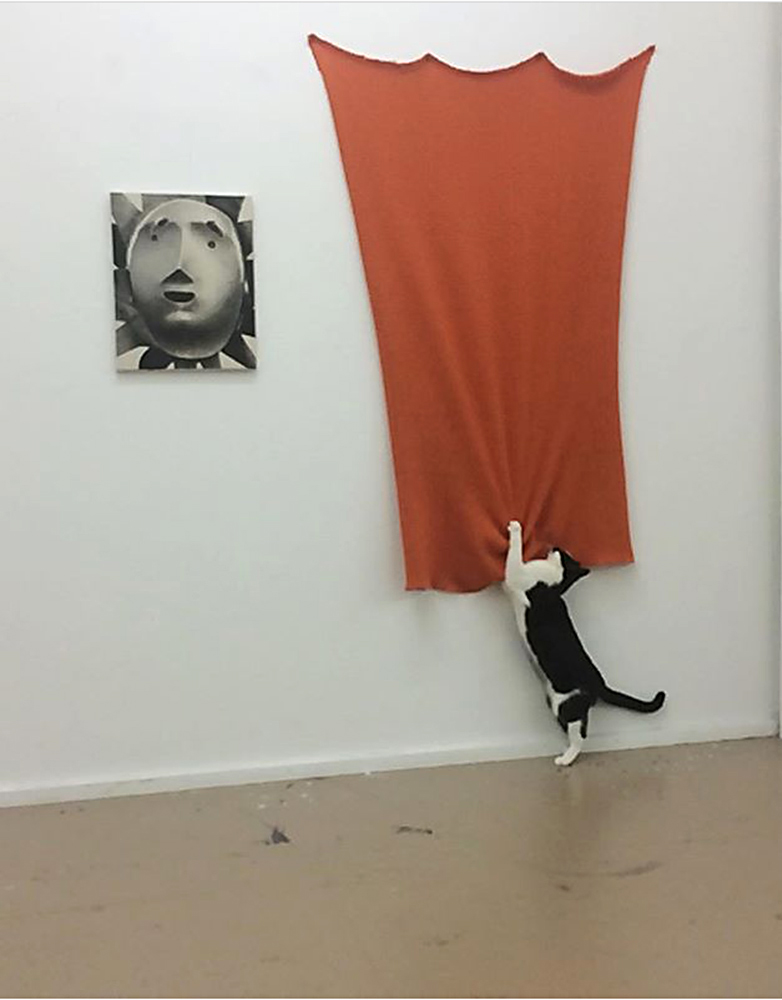
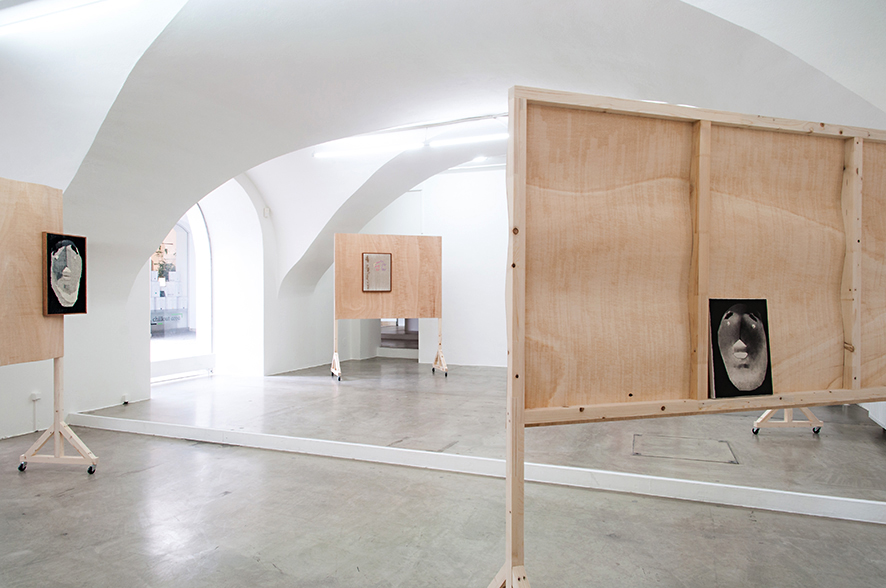
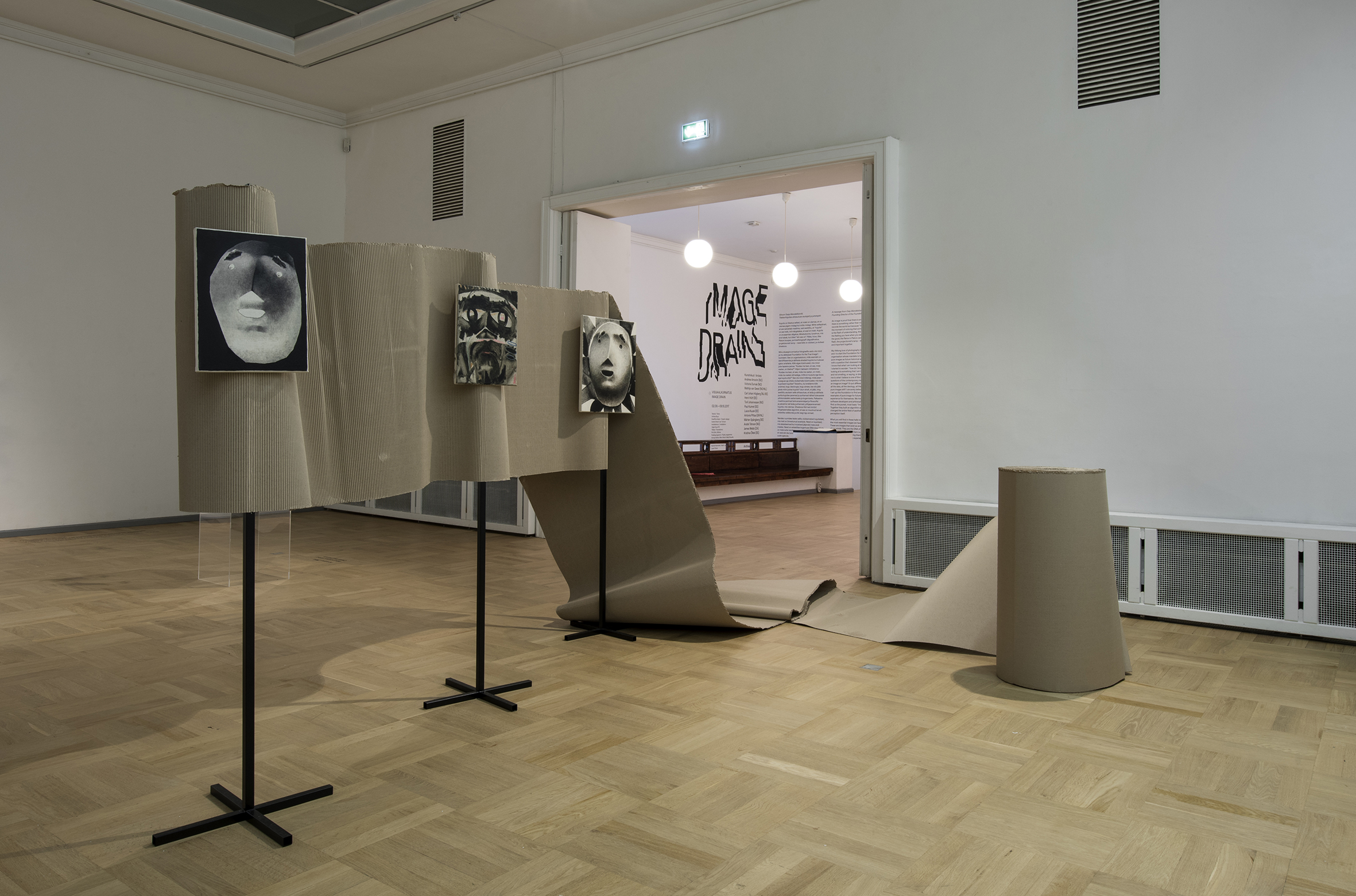
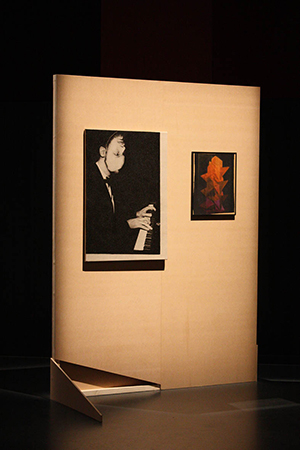
 "She Who Speaks", Installation view, Grazer Kunstverein 2018, photo: Christine Winkler
"She Who Speaks", Installation view, Grazer Kunstverein 2018, photo: Christine Winkler
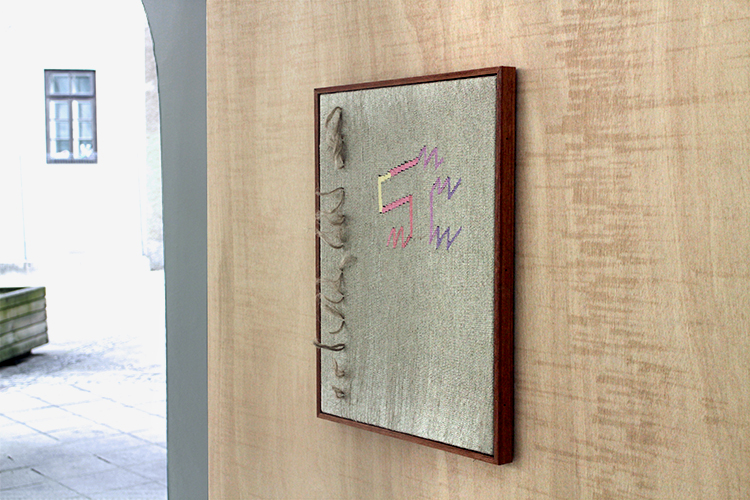 "She Who Speaks", Installation view, Grazer Kunstverein 2018
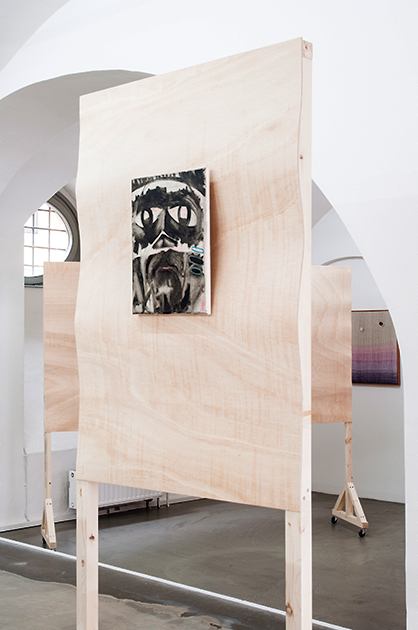 "She Who Speaks", Installation view, Grazer Kunstverein, photo: Christine Winkler 2018
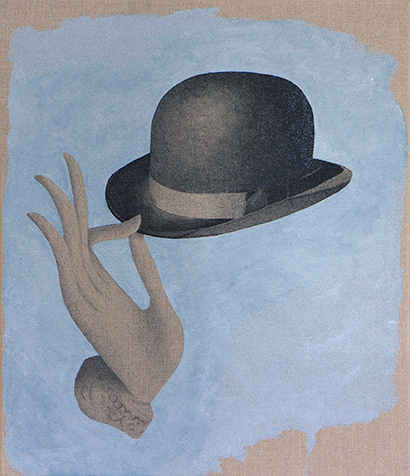
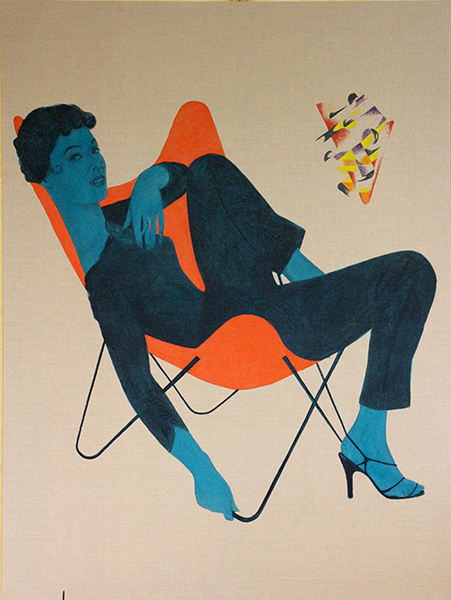
"Post-Fordist Yoga", oil on canvas, 70 x 60 cm, 2015
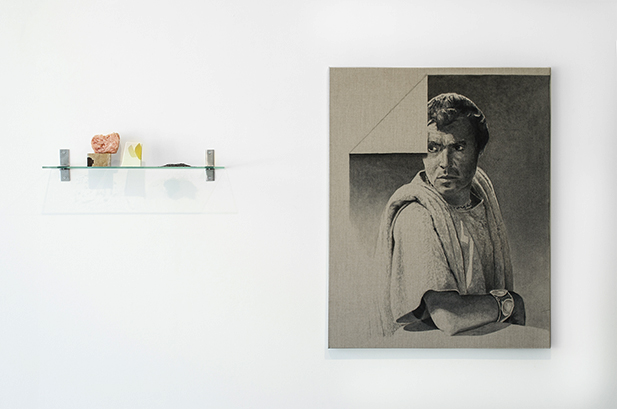 "Mid-Level Executive", oil on canvas, 90 x 70 cm, soap, glass shelf, 2015
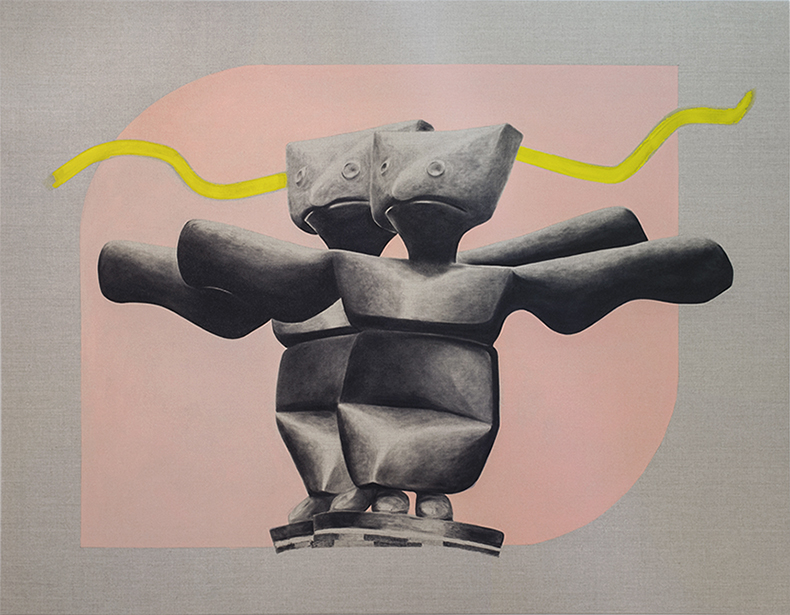 "Togetherness", oil on canvas, 230 x 180 cm, 2015
Laid-Back Company Allows Employees To Work From Home After 6 PM [1]
The timeliness of a pair of events recently came to my attention through a
text by the philosopher Franco Berardi. Perhaps unsurprisingly it involves the trajectories of two white men. First, in 1977 Charlie Chaplin died. But a few years before this, a man named Richard Nixon ended the Bretton Woods system, irreversibly shifting the international monetary system and cancelling the direct convertibility of the United States dollar to gold, thus creating a free-floating currency de-linked from any material that could constitute its value. Now, it might be that at this moment you are thinking: uh, what does this have to do with painting? And so I ask here that you read on a bit further and perhaps it may start to make some sort of sense.
As both tramp and dictator, Charlie Chaplin created an embodied resistance, a triumphant protagonist digging his way out of the adversity embedded in our capitalist drama. With his death, perhaps also came the inklings of a death of another sort – the (perhaps naïve) idea of a popular uprising within the horizon of modernism. And by this point, whatever clarity Fordist means of production might have afforded us had already started to muddle, the social stratifications and economic structures mutating to create ever-new means for extracting surplus.
After the end of the Bretton Woods system, the flimsy paper materiality of money detached itself from the metal it was meant to represent, the sign detached
from the signifier. And so signs are compared and exchanged with other signs in increasingly abstract transactions and negotiations. Meanwhile, the worker follows this trend too. The office is replaced by cafes with free wireless internet; the factory is relocated at ever greater remove from its consumers; products and job descriptions sublimate into mobile phone applications and teams of “trust engineers” managing your social media “experience” [2].
The lived milieu of post-fordism is increasingly characterized by the simultaneous creation and professional management of precarity [3]. Work and (seeming) non-work now encompass all time and activity. We escape our boredom by checking email on our phones, and the distinction between “networking opportunity” and “catching up with friends” is often pretty blurry in that list of upcoming Facebook events. The self-management required in this structure entails layers of meta-work: self-assessment, detailing of aims and objectives, engagement in so-called ‘professional development’, and of course, self-care. Corporate multi-nationals now provide any number of “perks” for their staff: a yoga or pilates class over the lunch hour (but when do you eat lunch?) and to retain you during your most productive years, there is also a $20,000 benefit available to freeze your eggs [4]. Meanwhile “health engagement companies” sell software (or as they prefer to call it: an “engagement ecosystem”) to corporate clients to improve the performance of their health
and wellness initiatives, “combining the latest behavioral science, cutting edge technology, and data analytics” to track employees weight, exercise habits, and other health indicators to create rewards systems for employees who become “healthier” [5].
So where does this leave us? Perhaps I should admit here that I own a yoga mat and I like to eat chia seed pudding. And yet, I would like to think that there could be such a thing as sincere irony, and that there could be a hopefulness in this. But can I wink and stare at the same time? I’m not sure where to go from here, so instead I will leave you with a quote from the philosopher whose writing started this text:
Irony implies the infinite process of interpretation, whereas cynicism results from a (lost) faith. The cynic has lost his or her faith; the ironist never had a faith to begin [6].
- Angela Jerardi
Exhibition text Post-fordist yoga, Galerie Ron Mandos, 2015
[1]
This title is borrowed; it is actually a title of an article from the satirical online newspaper, The Onion, published November 4, 2014, http://www.theonion.com/article/laid-back-company-allows-employees-to-work-from-ho-37358.
[2] The term “trust engineers” was used by Facebook to describe a department whose work involved performing experiments on unknowing Facebook users and analyzing this data to better understand and effect human social relations online. The department has since changed its name to the “Protective Care Team”.
[3] Irene Götz, “Sensing Post-Fordist Work Life: Recent Perspectives in the Ethnography of Work”, Ethnologia Europaea: Journal of European Ethnology 43:1 (2013), 76.
[4] Facebook and Apple are among the companies that currently provide this service to their female employees.
[5] Much of this wording comes from the website of RedBrick Health Corporation, www.redbrickhealth.com
[6]
Franco Birardi, The Uprising (Los Angeles: Semiotext(e), 2012), 166.
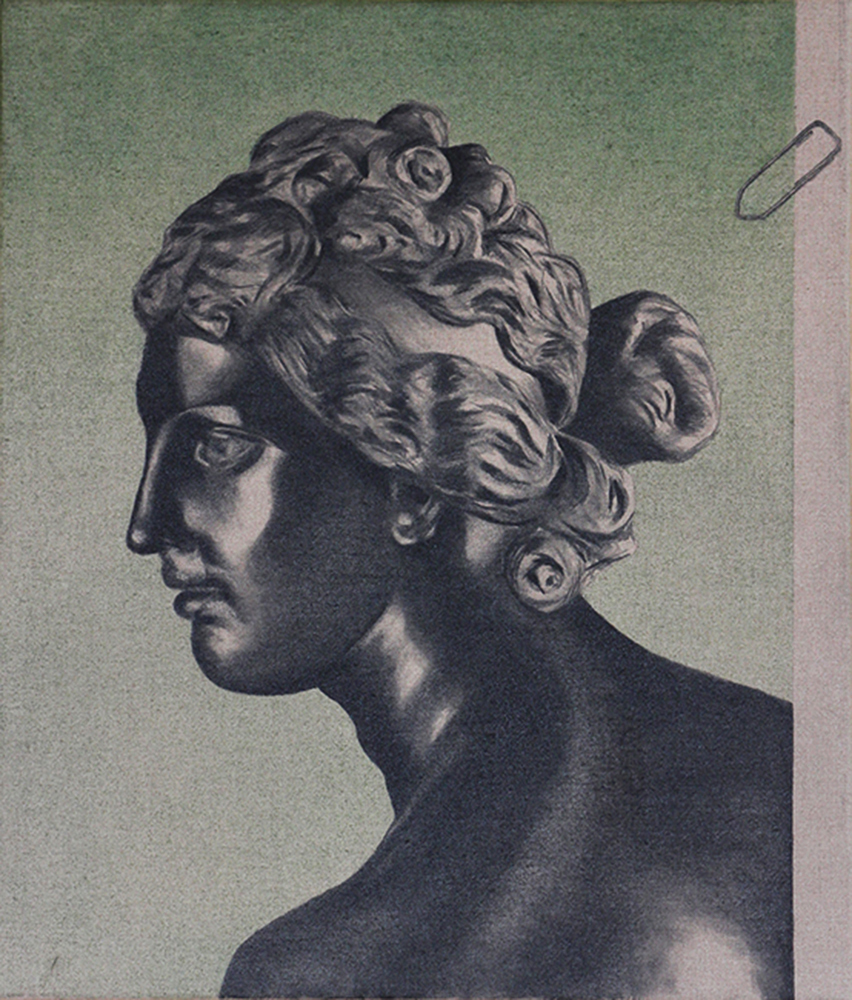
"Waiting for Açaí on Wilshire Blvd", oil on canvas, 70 x 60 cm,
2015
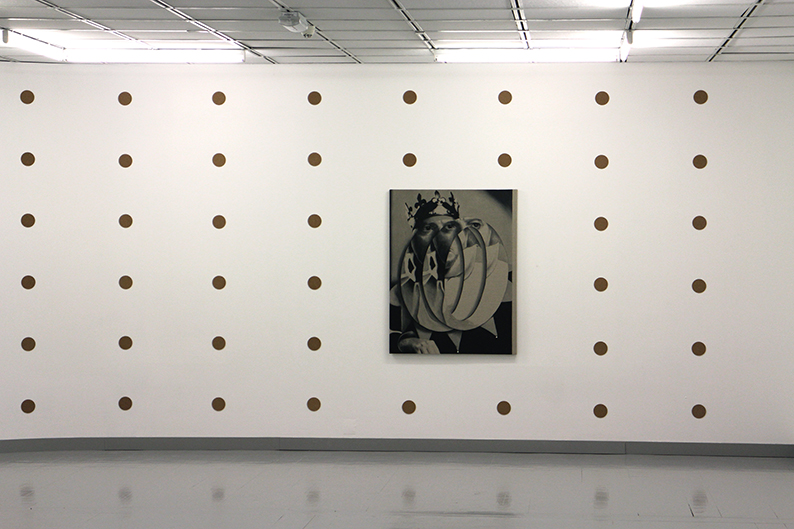 Installaton view, Shuttlecock feat. Bob’s Your Uncle Sports Bar, Hordaland Art Centre, Bergen, Norway, 2015
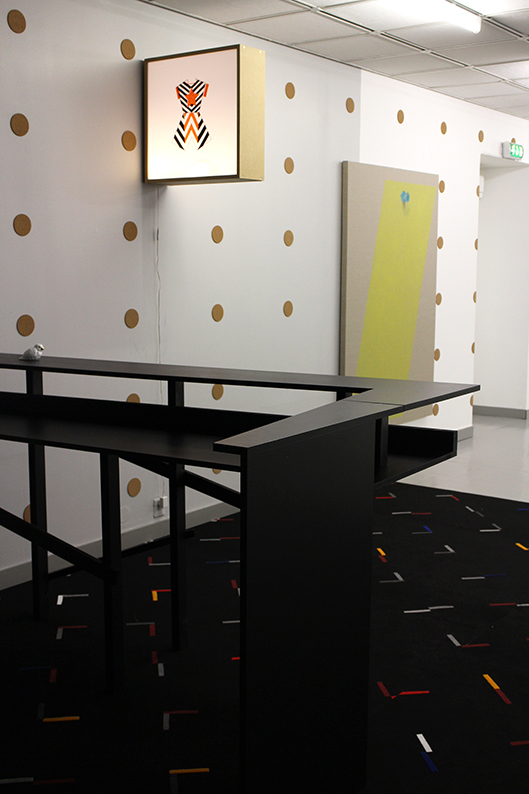 Installaton view, Shuttlecock feat. Bob’s Your Uncle Sports Bar, Hordaland Art Centre, Bergen, Norway, 2015
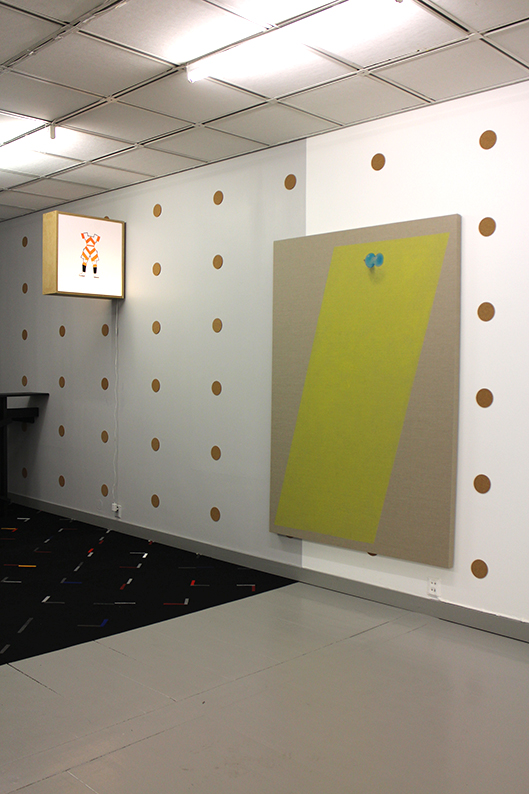 Installaton view, Shuttlecock feat. Bob’s Your Uncle Sports Bar, Hordaland Art Centre, Bergen, Norway, 2015
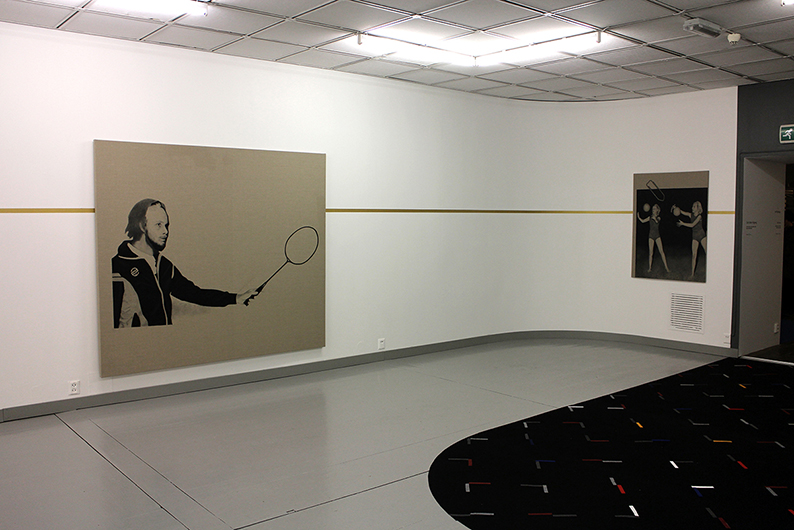 Installaton view, Shuttlecock feat. Bob’s Your Uncle Sports Bar, Hordaland Art Centre, Bergen, Norway, 2015
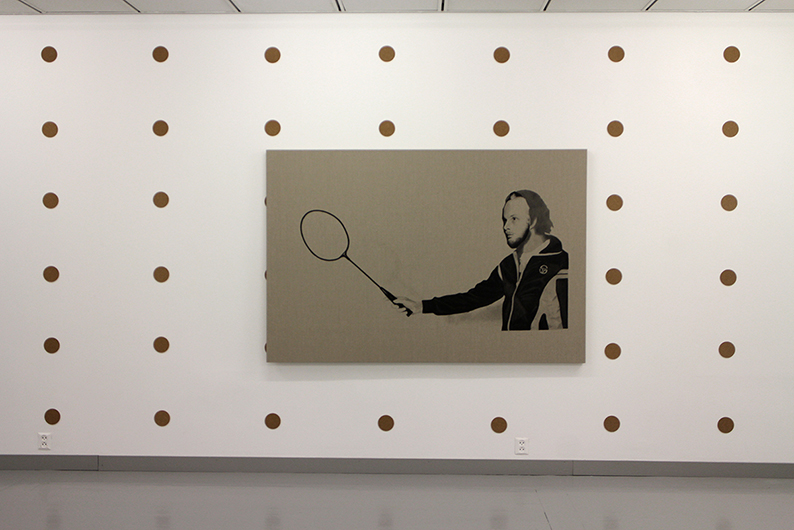 Installaton view, Shuttlecock feat. Bob’s Your Uncle Sports Bar, Hordaland Art Centre, Bergen, Norway, 2015
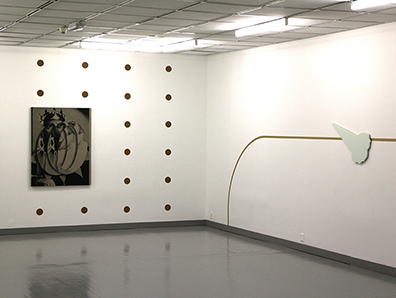
Installaton view, Shuttlecock feat. Bob’s Your Uncle Sports Bar, Hordaland Art
Centre, Bergen, Norway, 2015
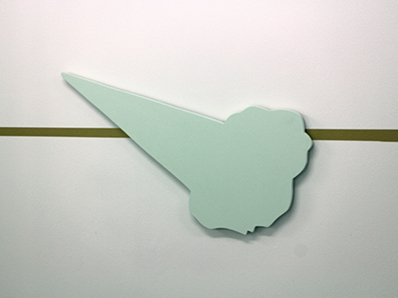
Aleksandra’s Hairdo, Semigloss paint on MDF, 60 x 45 cm, 2015 Olympic Standard,
Metallic paint on wall, dimensions variable, 2015
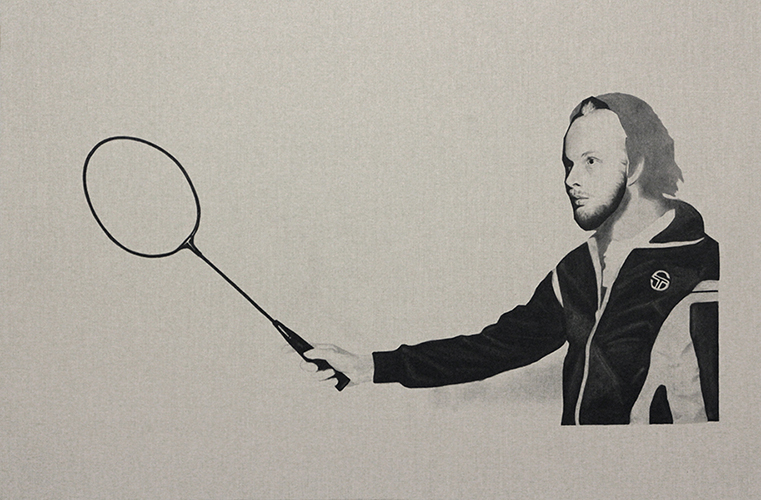 "The Impossibility Of Tickling Oneself I", oil on canvas, 190 x 130 cm, 2014
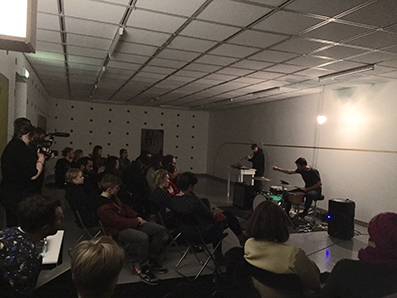
Concert with Part Wild Horses Mane On Both Sides during the exhibition Shuttlecock
feat. Bob’s Your Uncle Sports Bar, Hordaland Art Centre, Bergen, Norway, 2015
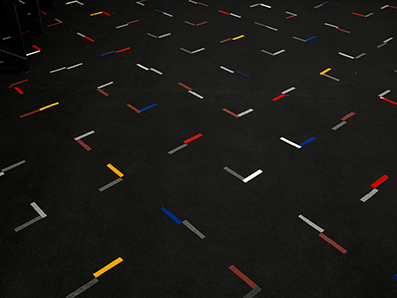
Carpet design for Shuttlecock feat. Bob’s Your Uncle Sports Bar, Hordaland Art Centre,
Bergen, Norway, 2015
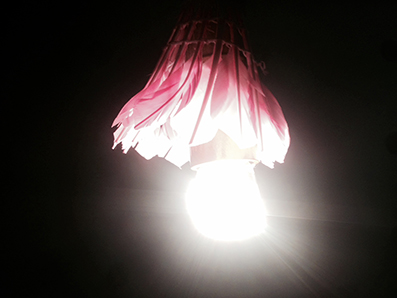
Lamp design for Shuttlecock feat. Bob’s Your Uncle Sports Bar, Hordaland Art Centre,
Bergen, Norway, 2015
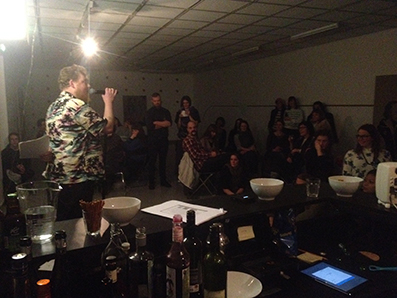
Swedish artist Tobias Karlsson performing at the first bar event during the exhibition
Shuttlecock feat. Bob’s Your Uncle Sports Bar, Hordaland Art Centre, Bergen, Norway,
2015
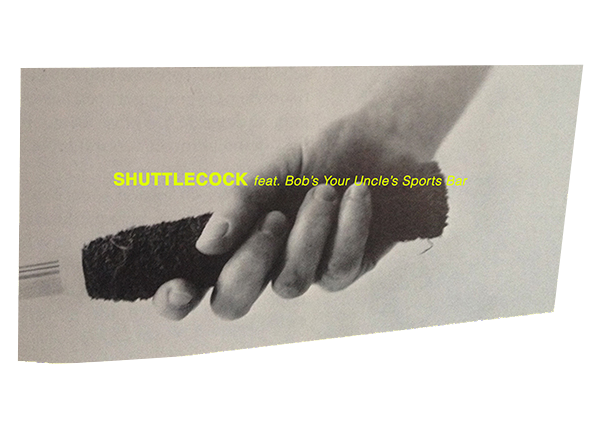
---> www.kunstsenter.no
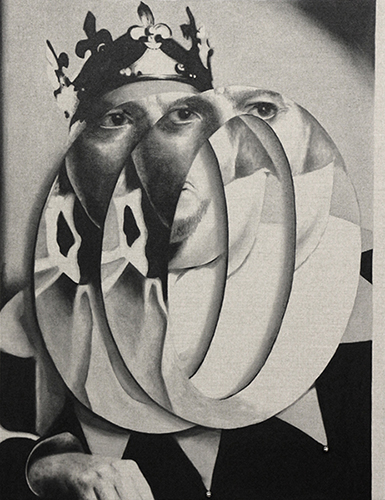
"L'œuf", oil and jingle bells on canvas, 120 x 90 cm, 2014
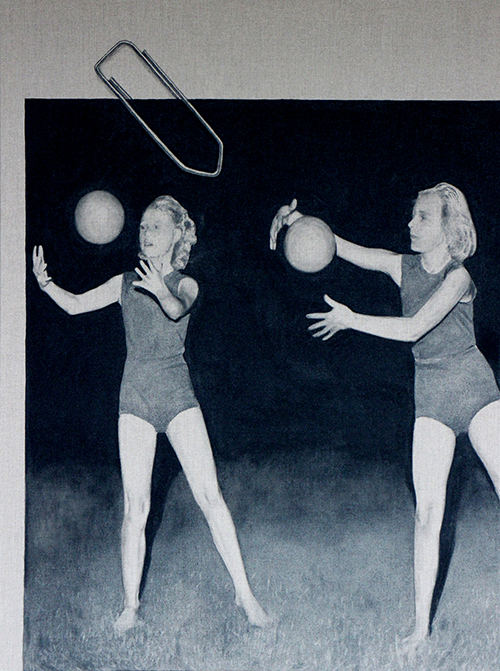
"Idla", oil on canvas, 120 x 90 cm, 2014
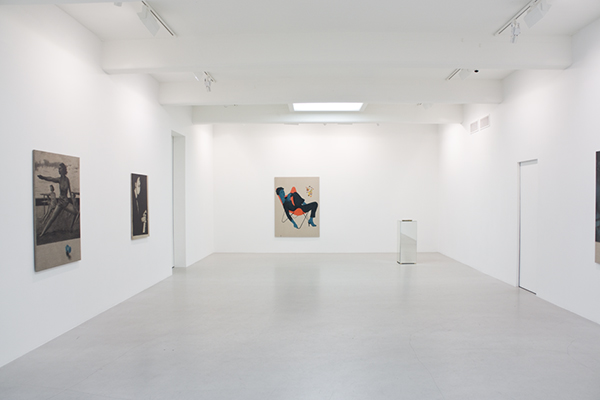
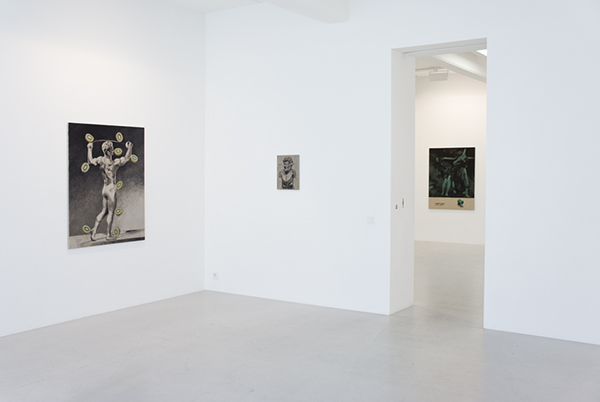
Christian Larsen Gallery 2013
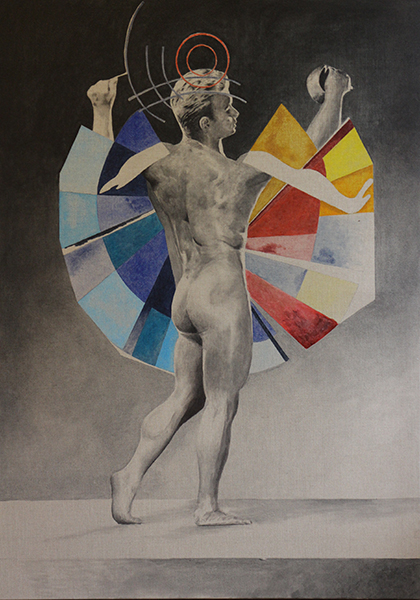
"Untitled", oil on canvas, 140 x 100 cm, 2013
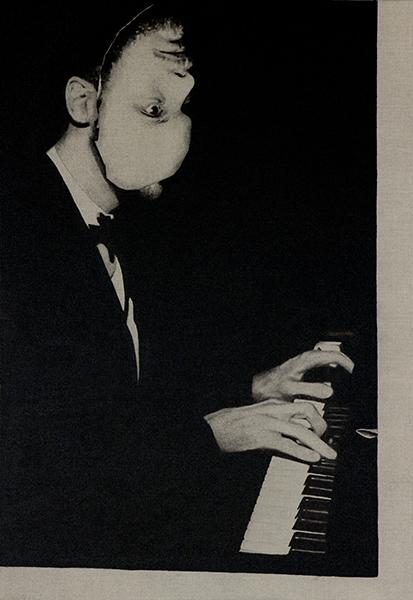
JJ, oil on canvas, 100 x 70 cm, 2012
Christian Larsen Gallery 2013
CARL JOHAN HÖGBERG 3 Oct – 3 Nov 2013
CHRISTIAN LARSEN is proud to present a solo project by the Swedish artist Carl Johan Högberg.
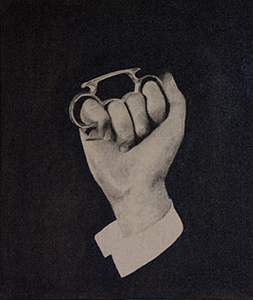
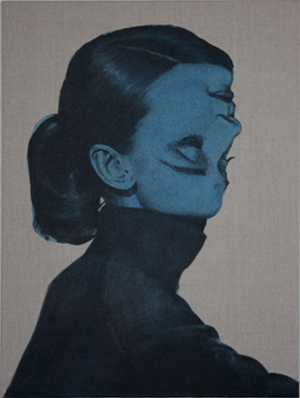
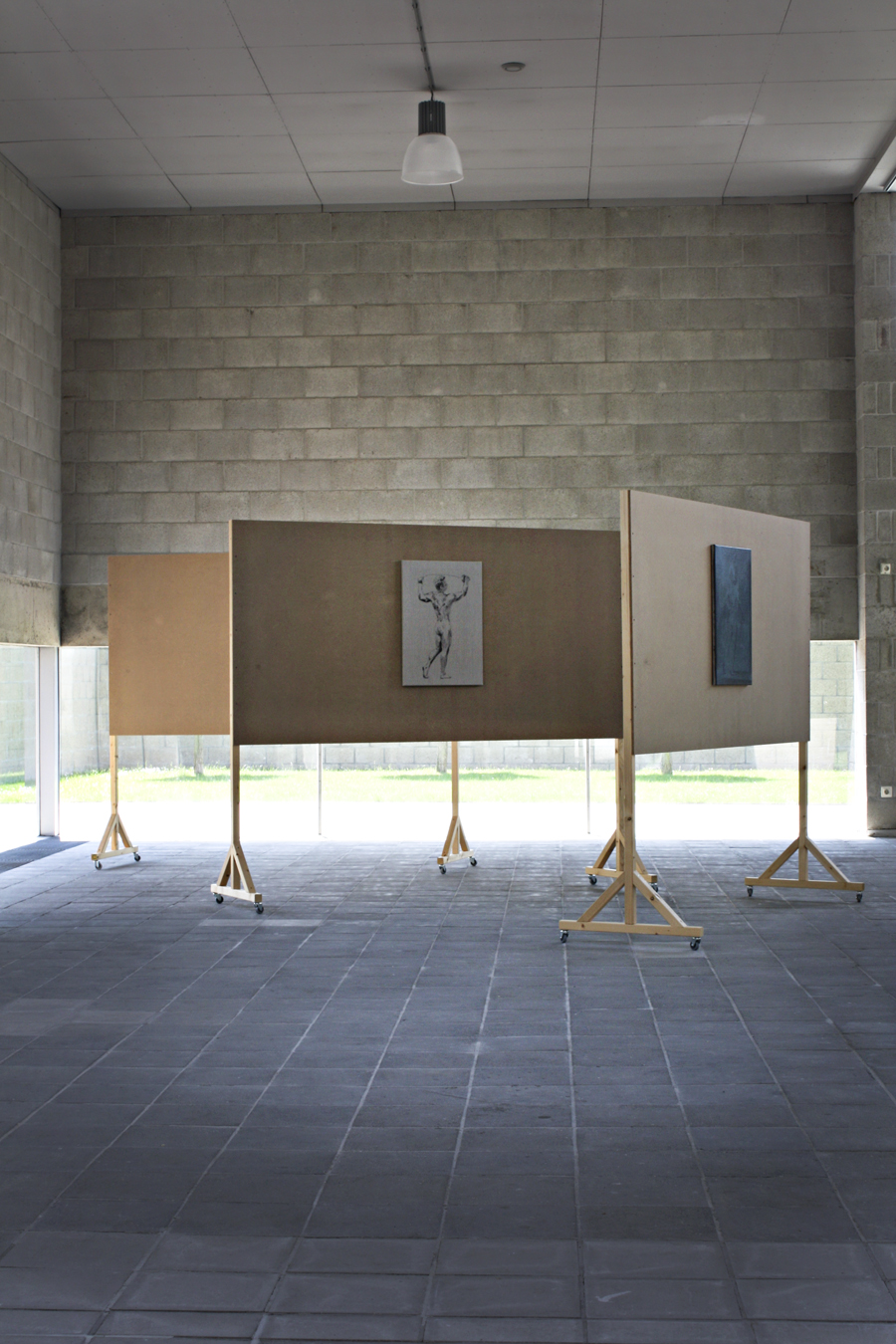
The enigmatic paintings by Carl Johan Högberg are deeply rooted in classic Surrealist montage. There is a man at the piano with his face upside down, old newspaper clippings and posters pinned to a wall, a portrait of a gentleman with a large leaf over his eyes and athletic young men with their legs cut off. Those interested in unraveling the mystery will often find clues in the paintings' titles and in the broader narrative that the individual works create together.
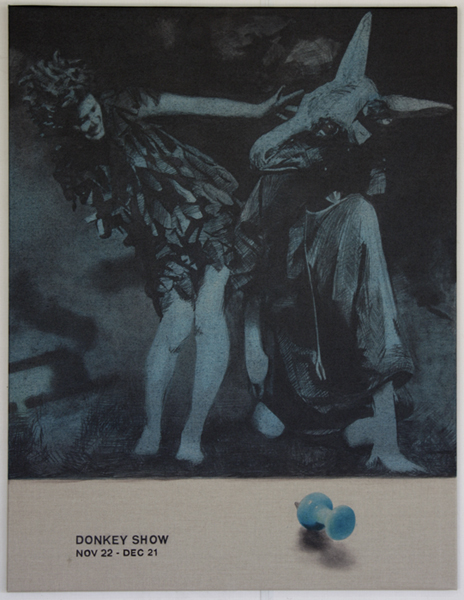
The man at the piano turns out to be the jazz legend Jan Johansson, who in 1965 made a remarkable gymnastics musical recording, a vinyl LP with an accompanying exercise folder, all under the mystifying name Rädda Sverige (Rescue Sweden). The gentleman with a Monstera leaf over his eyes is the Swedish prime minister Per Albin Hansson, active in the 30's and 40's. The newspaper clipping with gymnasts on the beach is an image of Idlaflickorna, post-war female Swedish gymnasts, strictly adhering to Leni Riefenstahl aesthetics. A poster of a Donkey Show, depicting a woman in costume and a donkey, belongs to an adaptation of Shakespeare's A Midsummer Night's Dream. The poster has a sinister feel to it and brings to mind the infamous Mexican Donkey shows - an awkward type of sexual performance in which women engaged in zoophilia. By juxtaposing images and titles saturated with social and political connotations, Carl Johan Högberg creates an unsettling aura around his works. They evoke an unheimlich, low-intensity discomfort as we start to freely associate within the framework outlined by the artist.
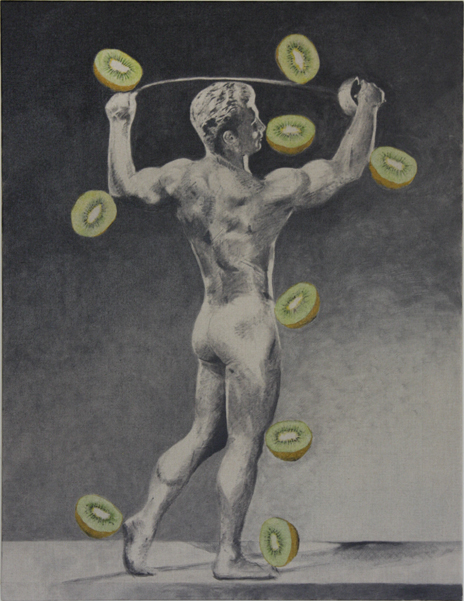
The overall vision becomes even clearer when we realize that many of the paintings refer to Health Through Sports, a collage by Max Ernst, the title of which Högberg even borrowed for an earlier exhibition. The collage, representing an athlete wearing a monstrous mask, alludes with it's title to Nazi Germany's wellness slogan, Strength Through Joy (Kraft Durch Freude). Sweden also entertained the idea of a liaison between fitness and a better society, with fascist undertones that were immanent in the very vision of the future. A future in which strength always was preferable to, and dominant over weakness. In his work, Carl Johan Högberg examines societies sorting mechanisms and the lingering segregating tendencies in all human beings.
Carl Johan Högberg was born in 1979 in Eskilstuna and works in Amsterdam, where he studied at the Gerrit Rietveld Academie as well as the prestigious De Ateliers. In 2010 he won the Netherlands' largest painting prize "Koninklijke Prijs voor Vrije Schilderkunst". In 2013, Högberg received a IASPIS scholarship in Stockholm and has recently participated in the group exhibition "The Black Moon" at Palais de Tokyo in Paris, curated by Sinziana Ravini . For the Swedish audience, his art was presented for the first time in 2010 in the exhibition Runaway Train at Bonnier Konsthall.
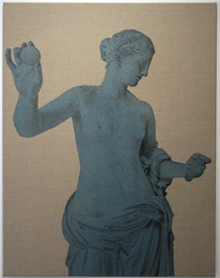
KINGFISHER
In ”Kingfisher” Swedish artist Carl Johan Högberg presents new paintings, textile works and ceramic objects in a site-specific installation that weaves together elements from the Arthurian legend of the Fisher King with myths and tales of the kingfisher bird.
In the old Celtic legend the Fisher King is the last keeper of the Holy Grail. Struck immobile by injuries in his legs and groin the wounded ruler sits fishing by a lake outside his castle. Being one with his kingdom, his empire is bound to suffer with its king, and as his wounds never heal the land is forever plagued with famine and war.
In the world of birds, it is said that the female kingfisher carries her aged male on her wings and takes care of him until he dies. Another old belief is that the body of a kingfisher, if dried and hung on a ship, can ward off thunderbolts and storms. The Swiss psychologist Carl Jung mentions the kingfisher in his legendary The Red Book, a diary he kept between 1914 and 1930 during sessions in which Jung conducted experiments on his own psyche. In the book Jung describes a dream he had one night in which an old Celt with horns of a bull and kingfisher’s wings appears from the sky and presents himself as Philemon, a figure who was later to become Jung’s guru and spirit guide. In order to remember the dream Jung immediately starts to paint the scene and when he is finished he is startled to find a dead kingfisher in his garden—chocked since the bird doesn’t naturally exist in the vicinity of Zurich. Later on he uses this event to describe synchronicity, the phenomenon of two or more apparently unrelated events occurring together, not by chance but out of meaningful coincident.
With the stories of the kingfisher and the Fisher King as point of departure, Högberg intertwines the accidental and the deliberate. The initial connection of two words mirroring each other echoes throughout the installation and new points of convergence emerge between the old myths. The works acquire their meaning from the way the individual pieces are shuffled, re-contextualized and put together to demonstrate new connections and relationships, reminding us that there are countless ways to interpret a story, a legend or, for that matter, a painting. By letting pre-existing images deplored of context inflect each other Högberg opens up for new associations, and the original narrative loose ground to a new tale of man’s timeless quest for intimacy, youth and health.
10 April - 25 June 2011,
BIS71 Ruimte Voor Kunst, Geleen
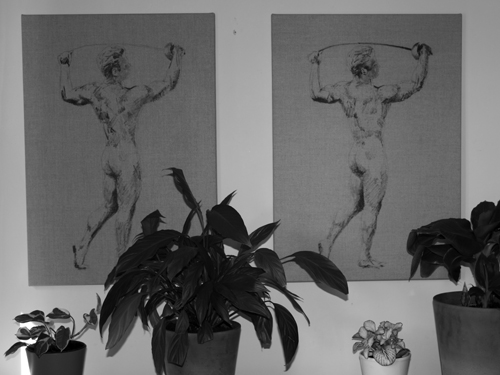
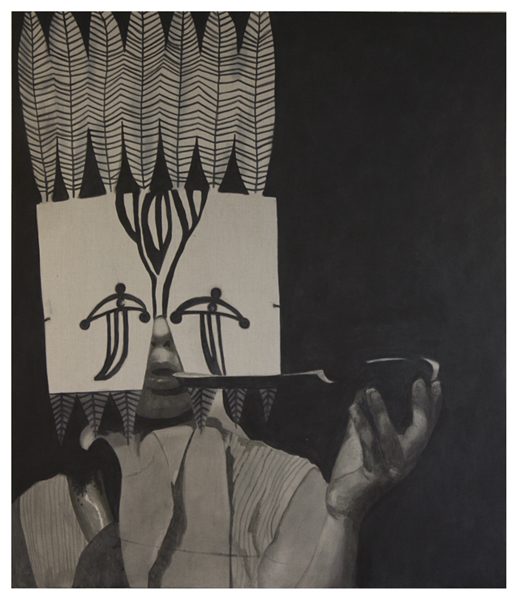
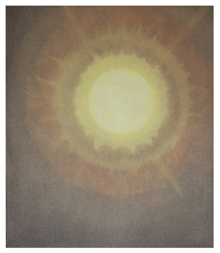
HEALTH THROUGH SPORTS #2
‘Health Through Sports’ is Carl Johan Högberg’s (1979, Eskilstuna Sweden) first solo exhibition at the gallery. With new enigmatic paintings, objects and textile works, he will do his utmost to demonstrate his relationship to a work by Max Ernst. It’s a show about jamais vu, anthropomorphism and obtaining health through sports.
In the photomontage La Santé par le sport (1920) by French Dadaist Max Ernst a classical male nude is standing, dramatically lit, on a pedestal. He holds a golf club in his left hand and an alligator’s brain in his right, his face obscured by a folk art-looking crochet butterfly. Drawn to different strategies of appropriation and interested in circumstantial reading of images, La Santé par le sport has become a mnemonic device, a voodoo doll that has haunted Högberg’s art for the last year.
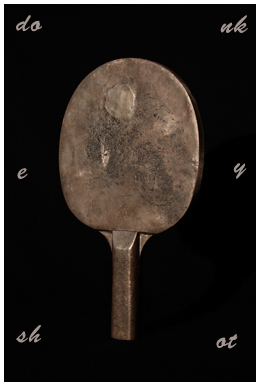
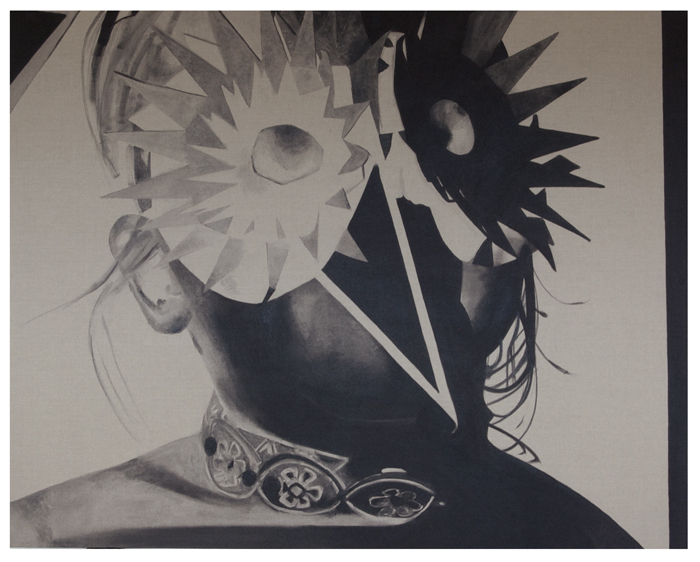
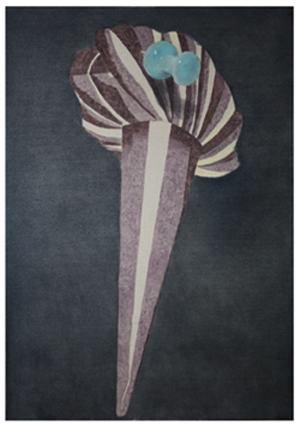
In Högberg’s painting ‘Health Through Sports’ (2010) a figure is wearing a home-made paper mask. Crowned by a Native American war bonnet and the eyes of Horus, the figure looms over the gallery and bears a curious resemblance to a surreal cult leader or a chieftain in a 1970s theatre production. On a pedestal made of mirrors lays a life-size ping pong bat cast in bronze. Initially it looks light to play with, but we are soon reminded that the bronze makes it too heavy for the hand. In another painting, a bearded man with a badminton racket in one hand and a shuttlecock in the other is slowly drowning in the light of a blazing sun.
With the surreal tension intact, the seemingly haphazard elements of Ernst’s picture are magnified in a parallel world of associations and oppositions. Pre-existing images depleted of context inflect one another to form new relationships and connections with Ernst’s photomontage as a constant reference. Nostalgia and estrangement from a time that has passed, blend with a fear of aging and an ambiguous tribute to youth and health, in works forming a non-linear vision without narrative foreclosure.
2 April - 7 May 2011,
Galerie Ron Mandos, Amsterdam
***
HEALTH THROUGH SPORTS #1
Carl Johan Högberg combines paintings, prints, posters and objects to create installations in which a construction of meaning develops through syntactic structure. Högberg employs the characteristic qualities of a medium to demonstrate formal relationships and intrinsic connections. The installation is a cross between a collage, in which fragmentary and associative meanings may be discovered, and a narrative whole, in which logical relationships exist between individual elements, However, the juxtaposition of different styles, materials, dimensions and contexts results in the moment of “objective” interpretation constantly being delayed.
The installation Health Through Sports (2010) consists of a vase, two paintings, a print, a folding screen and a bronze object. The title is an allusion the Max Ernst’s collage La Santé par le Sport (1920). In this work, Ernst combined a classical figure with surprising elements such as a butterfly mask and a golf club. Högberg’s painting of a young girl in a bird mask is derived from this collage and also alludes to Max Ernst’s nickname, the Bird Man. The print is an optical illusion; elongated geometric shapes turn out to be words. The bronze ping pong bat lying on the floor shows an imprint of a ping pong ball. The image is surreal in appearance and could also represent a moon in the sky at night. The vase, like the folding screen, serves to reinforce the exotic atmosphere that features in many of Högberg’s installations.
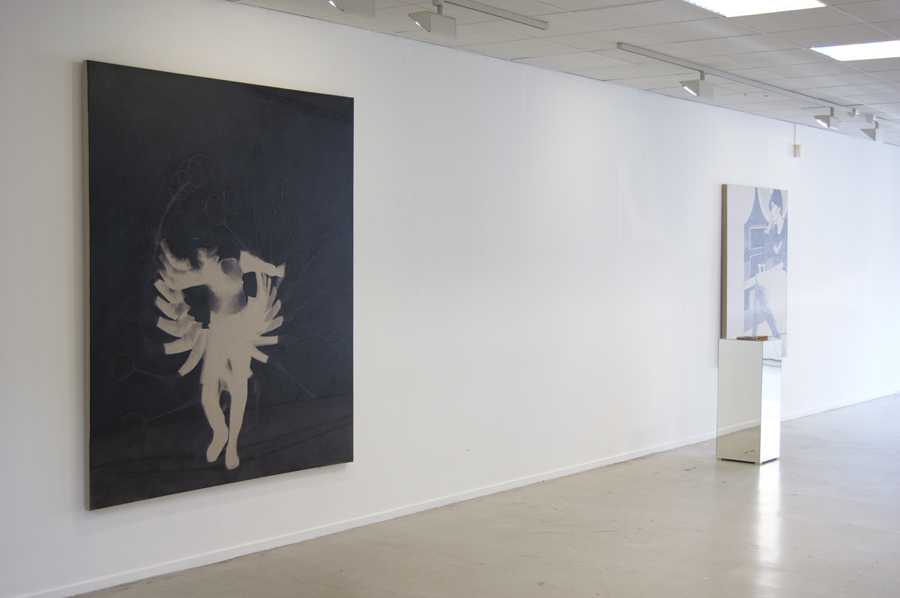
The images that Högberg employs come from a variety of contexts, like documents that functions as pieces of evidence. For example, in the installation She Who Speaks (2010) at Bonniers Konsthall and Smart project space (2009) he brought together a number if paintings and objects that related to the history of the medium Hélène Smith. Högberg intelligently combines allusions to her personal story with sculptural elements. Through a continuous process of interpretation and reinterpretation of the relationship between images, he creates a tension between subjective experience and a more objective consensus.
—Suzanne Wallinga, curator Offspring 2010
18 May - 30 May 2010,
De Ateliers, Amsterdam
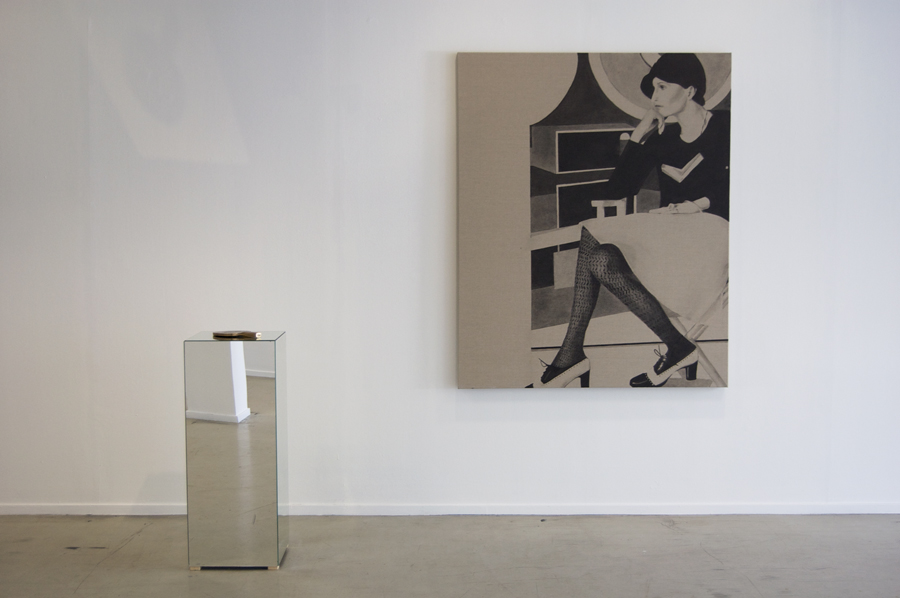
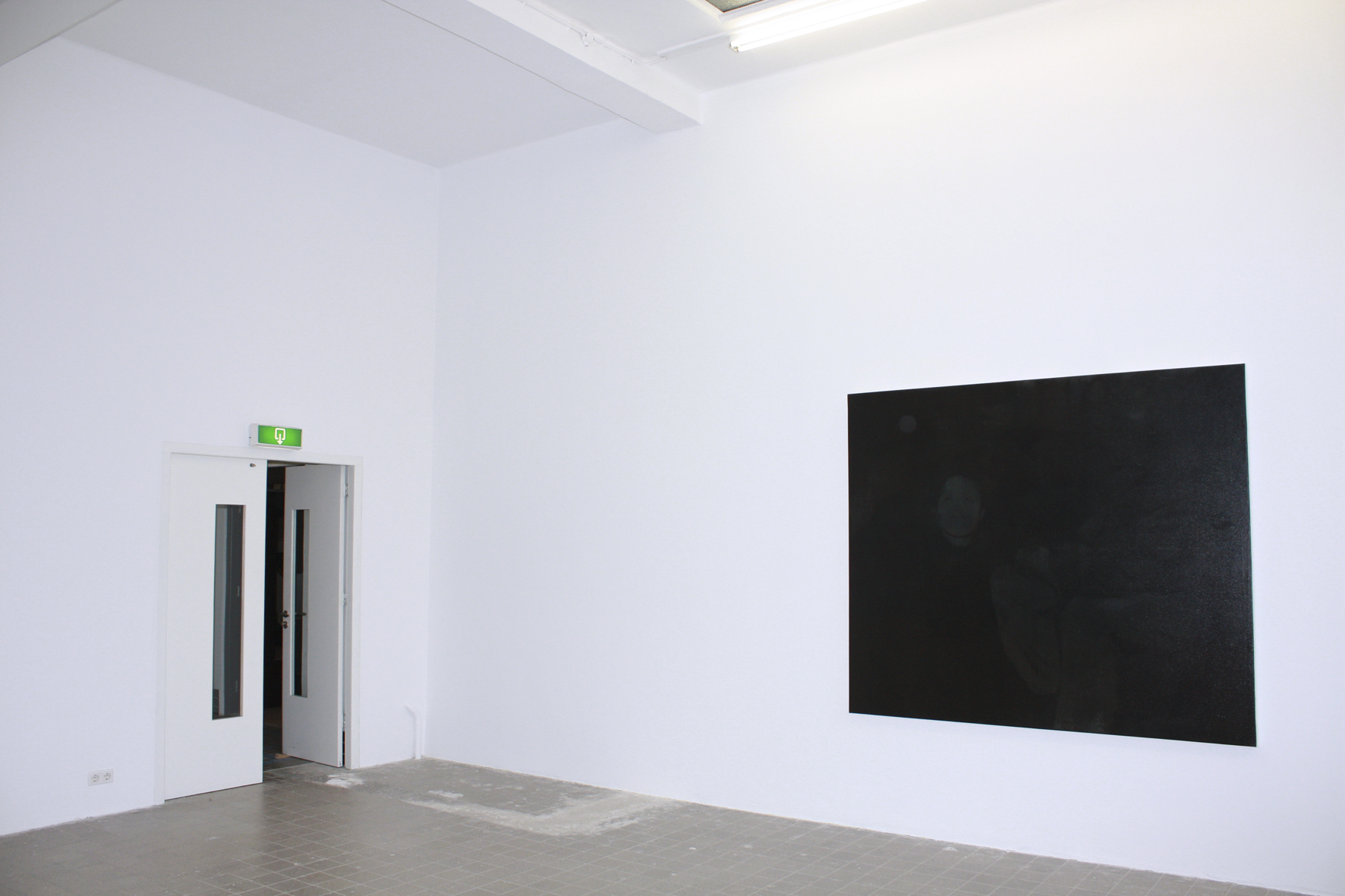 SHE WHO SPEAKS, Smart Project Space, 2009
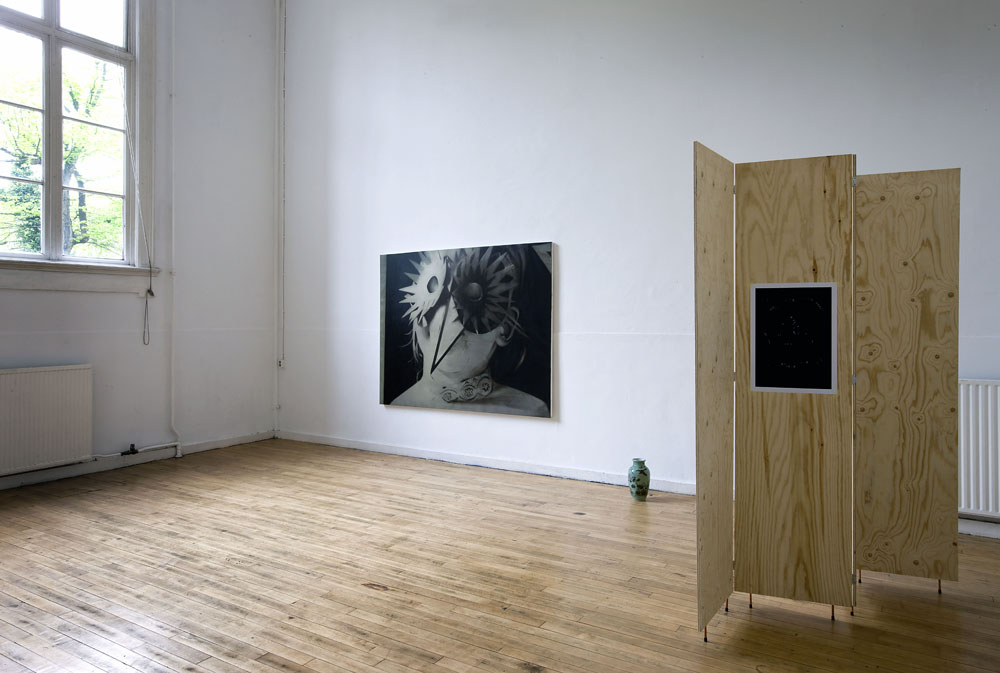
HEALTH THROUGH SPORTS, 2010
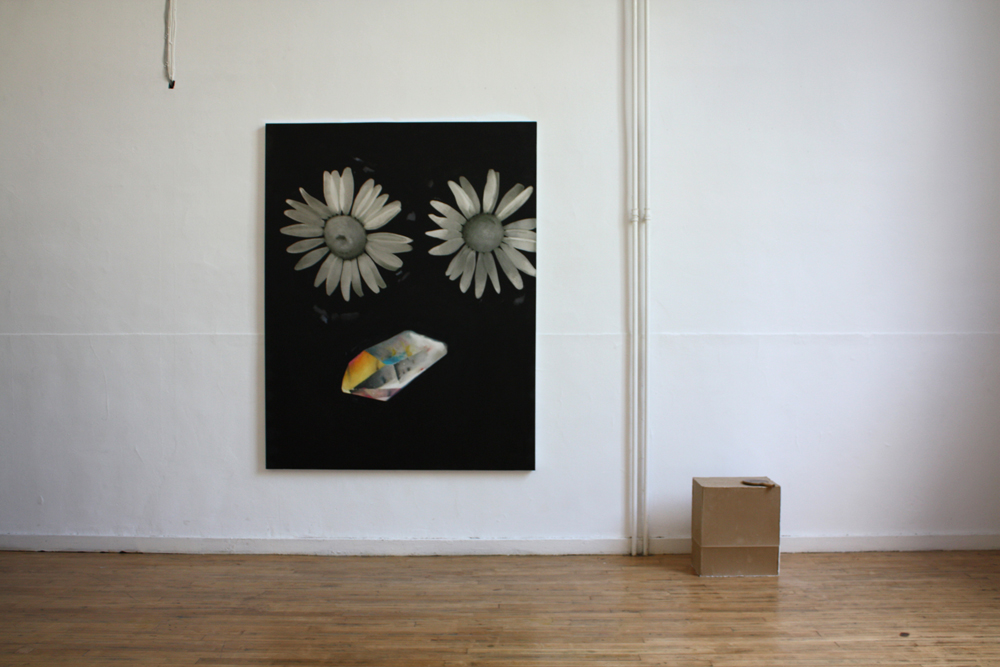 HEALTH THROUGH SPORTS
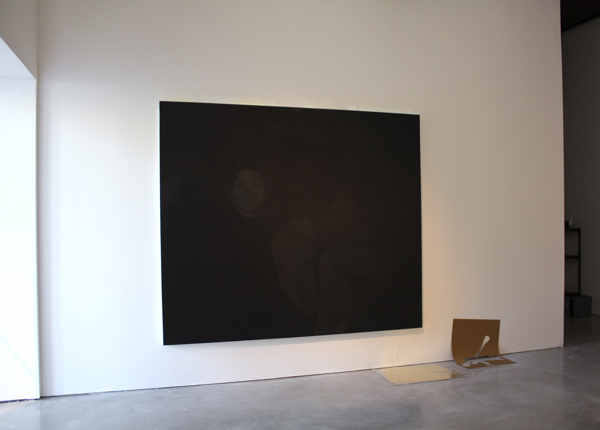
SHE WHO SPEAKS, Bonniers konsthall, 2010
Images from the top:
JJ, oil on canvas, 100 x 70 cm, 2012
Untitled, oil on canvas, 130 x 100 cm, 2012
Untitled, 52 poems, 2012
Untitled, oil on canvas, 80 x 60 cm, 2011
Donkey Show, oil on canvas, 130 x 100 cm, 2011
Donkey Shot, digital print on silk, 50 x 33 cm, 2011
Intstallation view, PROSPECTS & CONCEPTS - MONDRIAAN FONDS TOONT TALENT, Art Rotterdam, Rotterdam NL 2013
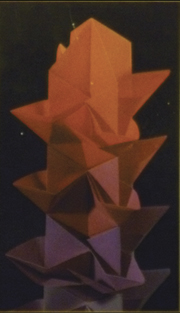
Untitled, digital print on silk, 2011 (© Robert Harbin by permission of the British Origami Society)
Installation view, KINGFISHER, BIS71 Ruimte Voor Kunst, Geleen 2011
Untitled, oil on canvas, 180 x 210 cm, 2011
Squash Queen, oil on canvas, 80 x 60 cm, 2012
Untitled
Health Through Sports, oil on canvas, 210 x 180 cm, 2011
Untitled, oil on canvas, 60 x 50 cm, 2011
Installation view, HEALTH THROUGH SPORTS, Galerie Ron Mandos, Amsterdam 2011
First Female Mask 1, oil on canvas, 100 x 70 cm, 2011
Installation view, HEALTH THROUGH SPORTS, Galerie Ron Mandos, Amsterdam 2011
Installation view, SHE WHO SPEAKS, Smart Project Space, Amsterdam 2009
Installation view, HEALTH THROUGH SPORTS, De Ateliers, Amsterdam 2010
Installation view, HEALTH THROUGH SPORTS, De Ateliers, Amsterdam 2010
Installation view, RUNAWAY TRAIN, Bonniers konsthall 2010
© Carl Johan Högberg 2021